


If you’re trying to lose weight, you’re probably thinking about the number on the scale. Fair. But there’s something else that matters too, especially as we get older: what happens to your bones while you lose weight.
Here’s the thing. When you lose weight, your body is carrying less load around all day. That sounds nice, but your bones actually like a bit of load. It helps remind them to stay strong. If the load drops a lot, bones can slowly get weaker over time.
That’s why researchers have been looking at weighted vests during weight loss. And a new study has a really clear message:
A weighted vest helps most when you spend more time standing and stepping.
Key Takeaways
-
A 2026 study found that a weighted vest may help protect hip bones during weight loss
-
BUT only if you spend more time standing and walking while wearing it.
-
If you wear a vest mostly while sitting, it probably won’t do much.
-
The big takeaway: vest + upright time = best results.
What did the study do?
The study was published in peer reviewed journal, Frontiers in Aging in 2026.
The researchers used data from a bigger trial where older adults were doing a weight loss program.
- Some people did weight loss only.
- Some did weight loss and wore a weighted vest.
- Some did weight loss plus resistance training (strength training).
But this new paper asked a different question, a very practical one:
Does it matter how much time you’re upright (standing or walking) when you wear a vest?
To figure this out, people wore an activity tracker that can tell when you’re sitting vs standing vs stepping. Then the researchers compared that with changes in hip bone density over time.

The Findings
The results were pretty simple:
If you wore a vest…
People who wore the weighted vest did better with hip bone results when they spent more time upright (standing and stepping).
So, if you’re wearing a vest and you’re up and about during the day, your body is getting more “good pressure” through your hips and legs. That’s the kind of signal bones respond to.
If you didn’t wear a vest…
In the weight loss only group, spending more time upright was linked with worse hip bone results.
That might sound odd at first. But think about it like this: if you’re losing weight, your bones are getting less load than they used to. If you’re upright a lot, you’re putting more “repeated load” through the hips — but now it’s lighter than before. The vest may help by adding some of that load back.
A weighted vest isn’t magic. It’s more like a tool.
It works best when it’s used during the parts of the day where you are standing and moving.
Why this matters for real life
A lot of people wear a vest and expect it to do the job on its own. But this study suggests something important:
If the vest is mostly worn while sitting (like working at a desk, watching TV, driving), it may not do much for your bones – because your bones aren’t being loaded in the same way.
But if the vest is worn while you’re doing everyday upright things, it can make those normal activities “count” a bit more.
That’s also why this research is exciting for people who don’t love the gym. You don’t need to do fancy workouts for the vest to be useful. Walking around the house, doing chores, short walks outside – it can all add up.
What about “metabolic slowdown”?
A News-Medical article talks about something many people feel during weight loss: metabolic slowdown. That’s when your body uses less energy than it used to, which can make it harder to keep losing weight or to maintain weight loss.
The idea is that adding extra weight back (with a vest) may help the body behave a little more like it did before weight loss, because you’re still “carrying” more load and using more energy during daily life.
Important note though: the Frontiers in Aging paper we’re focusing on is mainly about bones and upright time, not a full test of metabolism changes.

What this means for using a RUKVEST
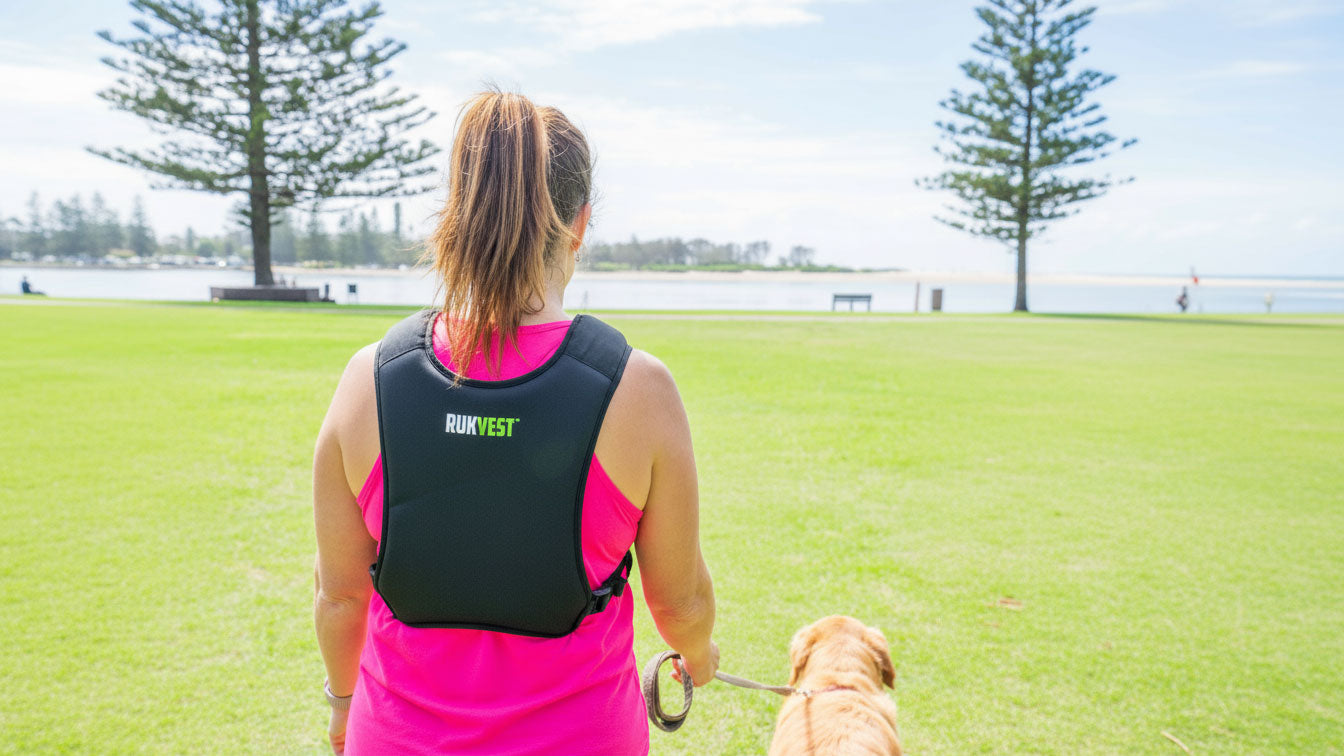
If you’re using a RUKVEST, this study points to a really practical habit:
Match your vest time with your upright time.
That could look like:
- wearing it for a morning walk
- wearing it while doing housework
- wearing it while you’re cooking and moving around the kitchen
- wearing it while doing errands (if it feels safe and comfortable)
You don’t need to go hard. You just want steady, regular time being upright. So don't save your weighted vest for the couch. Put it on for the parts of your day where you’re standing, stepping, and living your normal life.
And as always, start light, build slowly, and if you have pain, balance issues, osteoporosis, or joint problems then it’s smart to check in with your health professional first.


Share:
Celebrities That Know How Rucking Good Weighted Vests Are
Why Habit Stacking and a Weighted Vest Work So Well Together