


You don’t need a spare hour and a child-free house to stay strong. With a good weighted vest and 10 minutes here and there, you can train while the baby naps, the pasta boils, or the kids are building yet another Lego city.
All you need to get started is a 5KG vest and a handful of go-to moves. The trick is consistency and smart exercise selection, not perfection.
Key Takeaways
- You don’t need long gym sessions – 10 focused minutes in a weighted vest, a few times a week, is enough to build real “parent strength”.
- Base your quick circuits on big movements: squats, lunges, push-ups, planks and burpees for maximum return on effort.
- Start light (around 5–10% of your bodyweight) and prioritise smooth, controlled reps and good form over speed.
- Use “dead time” – naps, TV time, waiting for dinner – to knock out a fast vest circuit or a short ruck.
- A comfortable, well-fitted vest like RUKVEST with weighted gel makes it realistic to train around kids without rubbing, slipping or faff.
Why 10-Minute Weighted Vest Workouts Work for Parents
Between school runs, nap schedules and work, long workouts often just don’t happen. Short, focused sessions in a weighted vest are realistic. They:
- Turn daily “dead time” (naps, TV time, waiting for dinner) into strength work
- Add resistance without needing extra dumbbells or a gym
- Build muscle and stamina that carry over to real life – lifting kids, prams, groceries
- Give you a mental reset and stress relief in the middle of a busy day
Think of it as “fitness snacks” through the week, rather than one big feast on the weekend.
Quick Warm-Up (2–3 Minutes)
Before you strap on the vest, get your body moving:
- March in place – 30 seconds
- Arm circles – 10 forward, 10 backward
- Leg swings – 10 each leg, front to back, then side to side
- Torso twists – 20 gentle rotations
You’re just waking up the joints and getting some blood flowing so the weighted work feels smoother and safer.

The 10-Minute Weighted Vest Circuit
Here’s a simple structure:
- Work for 40 seconds, rest for 20 seconds
- Move through all five exercises
- Got time? Repeat the circuit once for a 10-minute blast
Start light (around 5–10% of your bodyweight in the vest) and build up as it feels easier.
1. Weighted Vest Squats – Everyday Strength
Squats are your “parent power” movement. They hit quads, hamstrings and glutes – all the muscles you use to pick kids up off the floor or out of car seats.
How to do it:
- Stand with feet about shoulder-width apart, vest snug
- Push hips back and bend knees as if sitting into a chair
- Keep chest up, knees tracking over (not inside) your toes
- Go as low as feels comfortable, then drive back up
Parent hack: Do these while your toddler plays at your feet or while you’re supervising bath time (away from slippery floors, of course).

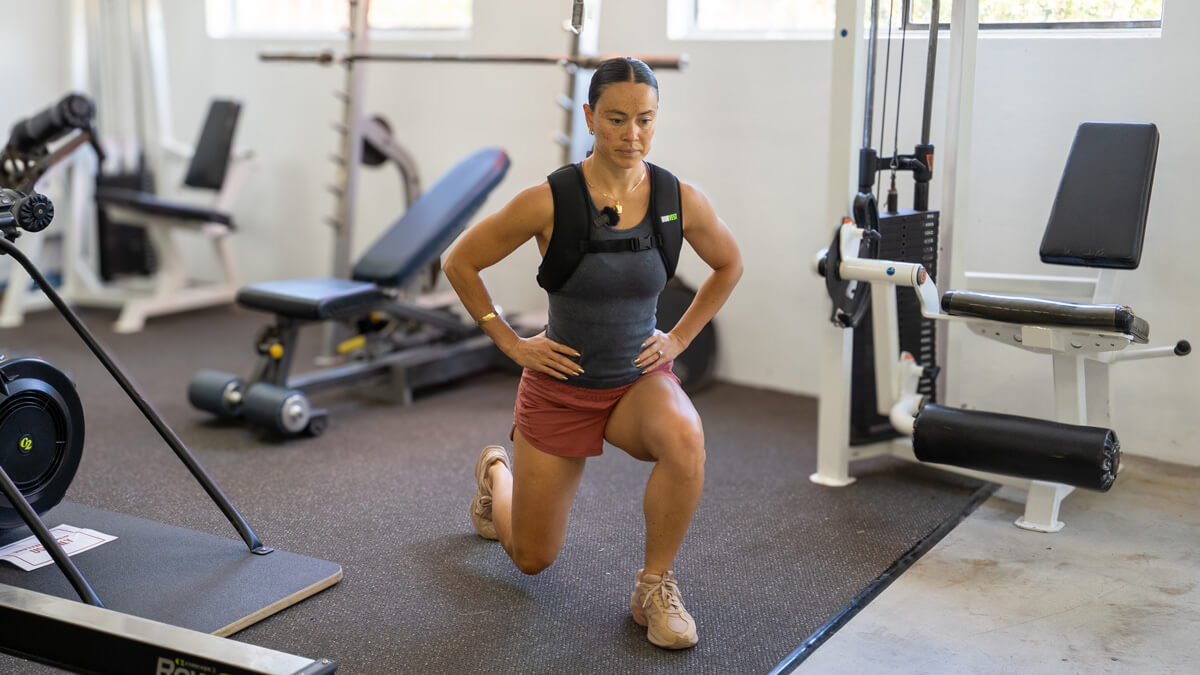
2. Weighted Vest Lunges – Legs and Balance
Lunges build strong, stable legs and train your balance. Great for stairs, uneven playgrounds and carrying a wriggling child on one hip.
How to do it:
- Stand tall with feet hip-width apart
- Step one foot forward, lowering until both knees are bent about 90 degrees
- Front knee stays stacked over the ankle, not caving inward
- Push through the front heel to return to standing, then switch legs
Parent hack: Walk your lunges up and down the hallway while the kids do a toy “tidy up race.”

3. Weighted Vest Push-Ups – Upper Body and Core
Push-ups with a vest are a simple way to build your chest, shoulders, triceps and core with zero equipment on the floor.
How to do it:
- Place hands slightly wider than shoulder-width on the floor, a wall or a chair
- Brace your core and create a straight line from head to heels (or knees)
- Lower your chest toward the floor with control
- Push the floor away and return to the start position
Parent hack: Use the edge of the couch or kitchen bench for incline push-ups if the floor is too much right now.

4. Weighted Vest Planks – Rock-Solid Core
Planks with added load train the deep core muscles that stabilise your spine. This pays off every time you lift a kid, carry bags, or stand for long periods.
How to do it:
- Set up on forearms and toes, elbows under shoulders
- Body in a straight line – no sagging hips or high bum
- Brace your core and squeeze glutes
- Hold for 20–40 seconds, breathing steadily
Parent hack: Hold a plank while your baby has tummy time or while your kids count down the seconds for you.

5. Weighted Vest Burpees – Full-Body Finisher
Burpees are your “all-in-one” move: legs, core, upper body and cardio in a single exercise. Add the vest and you’ve got a serious conditioning hit in very little time.
How to do it:
- From standing, squat down and place your hands on the floor
- Jump or step your feet back into a plank
- (Optional) Drop your chest to the floor for a push-up
- Jump or step your feet back to your hands
- Explosively stand up and add a small jump if you can
Parent hack: Keep burpees low-impact by stepping instead of jumping if kids are asleep or your joints prefer it gentler.
Form First: Staying Safe in a Weighted Vest
More weight is only useful if your form is solid. A few non-negotiables:
- Move with control – no frantic reps just to beat the clock
- Keep knees happy – they should track in line with your toes, not cave in
- Brace your core on every rep to protect your lower back
- Stop if it hurts in a sharp or weird way – adjust, regress or skip the move
Better to do fewer, high-quality reps than rush through a messy 40 seconds and pay for it later.
Why This Style of Training Works for Busy Parents
Short weighted vest sessions punch above their weight. With as little as 10 minutes, you can:
- Build real-world strength that translates to parenting tasks
- Boost energy instead of draining it with long, exhausting workouts
- Get a hit of endorphins that makes stress and overwhelm easier to handle
- Show your kids that movement is just a normal part of daily life
- You’re not chasing perfection. You’re stacking small, repeatable wins across the week.
Choosing the Right Weighted Vest: Why RUKVEST Suits Modern Parents
If you’re squeezing a workout into 10 minutes, uncomfortable gear is the last thing you need. That’s where a well-designed vest like RUKVEST can make a difference.
- Weighted gel comfort: RUKVEST uses weighted gel to sit smoothly against your body, reducing pressure points so you can move, bend and play without digging or rubbing.
- Snug, adjustable fit: Secure straps help the vest stay put when you squat, lunge or chase a toddler down the hallway.
- Progressive loading: Adjustable weight lets you start light and add more as you get stronger, instead of needing a whole set of dumbbells.
The goal is simple: throw the vest on, get your 10 minutes done, then get back to life. No fiddling, no faffing, just work.

Performance Features That Actually Matter
When you’re choosing a vest, focus on:
- Even weight distribution so your shoulders and back don’t cop all the load
- Weighted gel padding for comfort if you’ll be wearing it around the house, on walks or while rucking
- Secure closures so it doesn’t bounce around when you move faster
- Simple on/off design – you want to be able to throw it on the second your kid falls asleep
If it isn’t comfortable or easy to use, you simply won’t reach for it on a busy day.
Maximising Results from Your 10-Minute Sessions
- Pick your window: Nap time, pre-shower, or right after school drop-off are perfect slots.
- Stick to the same circuit for a few weeks so you can actually see progress.
- Log your rounds or reps – small improvements keep you motivated.
- Walk or ruck in the vest on other days for low-impact conditioning.
Think “minimum effective dose.” Your job is to show up, move with intent, and repeat that as often as life allows.
Bringing Weighted Vest Training into Your Parenting Life
When you treat movement as something that fits around parenting – not something that competes with it – everything gets easier. Squats in the living room, lunges in the hallway, a quick ruck with the pram, planks next to the playmat: it all counts.
With a comfortable vest and a handful of reliable exercises, you can build a stronger, more resilient body in the same house where you’re raising your kids. Ten minutes at a time is enough.



Frequently asked questions
How can a weighted vest help in just 10 minutes?
The vest adds resistance to simple bodyweight moves, so you get more muscle activation and calorie burn in less time. Done consistently, those short sessions add up fast.
What exercises are best for a quick weighted vest workout?
Stick to big, compound moves: squats, lunges, push-ups, planks and burpees. They hit multiple muscle groups at once, giving you the most return on effort.
Can I wear a weighted vest while playing with my kids?
Yes – as long as you can move safely, you can wear it while walking, playing gentle games or doing light chores. Just avoid high-impact jumping around small kids or slippery surfaces.
How much weight should I start with?
Most beginners do well starting with around 5–10% of their bodyweight. It should feel challenging but not brutal. You should still be able to move with good form.
How often should I do these 10-minute sessions?
Aim for 3–4 times per week. If you’re also walking or rucking in the vest on other days, even better. The magic is in consistency, not in smashing yourself once a week.
Share:
10 Ways to Supercharge Japanese Walking With a Weighted Vest
How to Adjust Your RUKVEST Weighted Vest for a Comfortable Fit